Electronic Invoicing Deadline and What It Means for Online Sellers
Under BIR Revenue Regulations No. 26‑2025, Small, Medium and Large taxpayers engaged in e‑commerce must adopt BIR‑compliant electronic invoicing by December 31, 2026. Micro e‑commerce taxpayers are currently exempt, but classification is based on your BIR registration—not on marketplace size or sales channel. Confirm your taxpayer class with your accountant or Revenue District Office before assuming an exemption.
Who Is Covered
Covered by the deadline: Small, Medium, Large taxpayers; Large Taxpayers Service registrants; businesses using a Computerized Accounting System or invoicing software.
Exempt: Micro e‑commerce taxpayers under current rules.
Note: POS users and other groups may be subject to separate BIR conditions.
What Qualifies as an Electronic Invoice
An electronic invoice must be system‑produced by a registered computerized accounting or invoicing system that outputs structured, machine‑readable data.
A PDF, printed invoice, or manually typed spreadsheet does not meet the BIR’s e‑invoicing standard by itself.
Electronic invoicing is distinct from the Electronic Sales Reporting System, which the BIR will implement separately.
How Ecommerce Sellers Should Prepare
Confirm taxpayer classification with your accountant or RDO.
Audit your invoicing setup: CAS, invoicing software, or manual processes.
Standardize data: align marketplace SKUs with accounting item codes; verify tax rates, customer fields, payment records, discounts, and shipping charges.
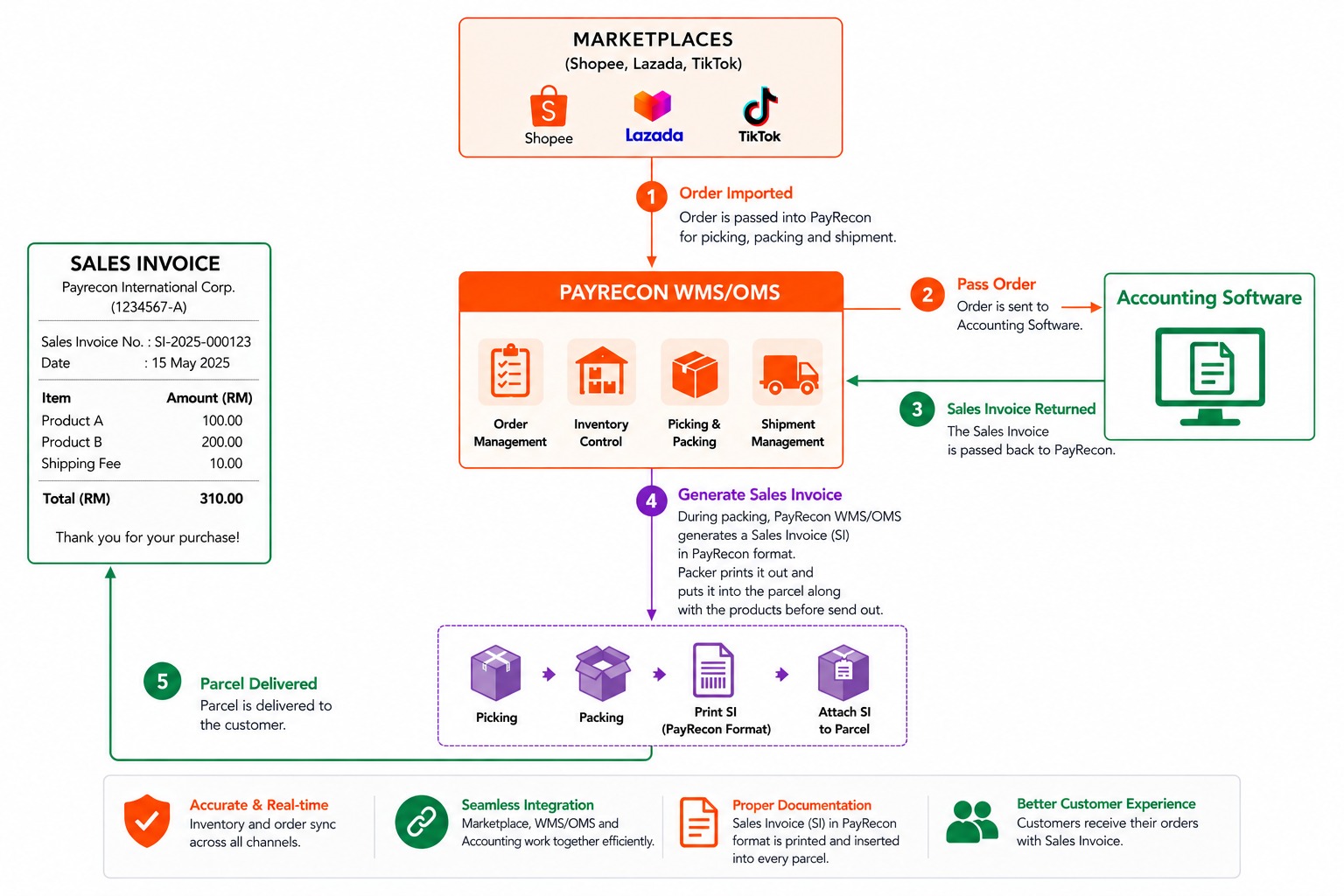
Integrate workflows: connect marketplace orders to accounting to reduce manual exports and encoding.
Test thoroughly: run sample orders, cancellations, returns, credit notes, and reconciliations; reconcile against marketplace settlements.
Start early if you operate multiple stores or process high daily order volumes—mapping and reconciliation take time.
Payrecon Integration and Capabilities
Payrecon collaborates with AutoCount Accounting 2.1, 2.2, POS and QnE N3 AI Accounting, and Optimum (all BIR‑accredited) to deliver a complete e‑commerce accounting workflow. Key capabilities include:
E‑invoice generation compliant with structured data requirements.
Automatic inventory deduction when orders are processed.
Marketplace updates to Shopee, Lazada, TikTok Shop, and other channels.
Credit note issuance and management.
Payment knock‑off and reconciliation to match receipts with invoices.
AI sales reports for faster insights and better forecasting.
This integrated approach reduces manual entry, improves data consistency across channels, and helps prepare sellers for BIR compliance.
Important Reminder and Next Steps
Software integration does not replace the seller’s responsibility to complete BIR registration, permits, and professional tax review. To prepare for the December 31, 2026 deadline: confirm your taxpayer classification, map SKUs and accounting codes, coordinate with your accountant and software provider, and schedule testing and rollout well before year‑end.
Ready to get compliant? Contact Payrecon at +63 961 527 2591 (Viber, Whatsapp or call) to assess integration requirements and plan deployment.