FIFO vs FEFO: Which Inventory Method Saves More Money for FMCG Sellers?
Introduction
For FMCG sellers, inventory decisions are not just operational choices — they are financial decisions. With thin margins, fast stock movement, and strict expiration dates, choosing the wrong inventory method can quietly drain profits through waste, write-offs, and inefficient fulfillment.
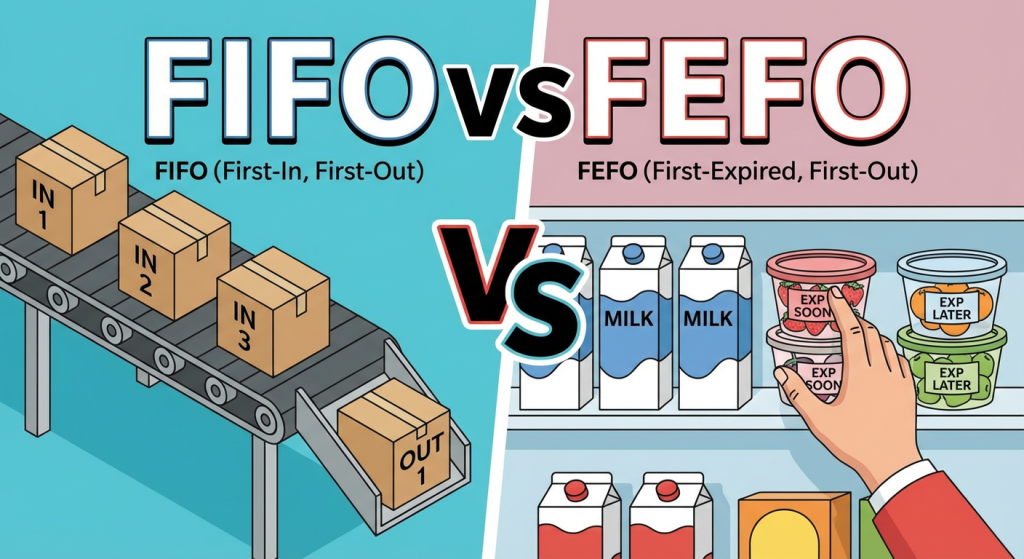
Two inventory strategies are commonly discussed in FMCG operations: FIFO (First-In, First-Out) and FEFO (First-Expired, First-Out). While both aim to improve stock rotation, their impact on cost control is very different.
This article breaks down the differences between FIFO and FEFO, explains their cost implications, and helps FMCG decision-makers choose the inventory method that best protects profitability.

Why Inventory Method Matters for FMCG Sellers?
Every unsold expired item represents:
- Direct revenue loss
- Disposal or return costs
- Increased operational inefficiency
For eCommerce managers and operations leads, inventory strategy directly affects:
- Cost of goods sold (COGS)
- Waste and write-offs
- Customer satisfaction
- Overall profit margins
That is why many FMCG managers actively search for terms like “FIFO vs FEFO cost” or “best inventory method for FMCG” — they are looking for a method that is not only operationally sound, but financially smarter.
What is FIFO?
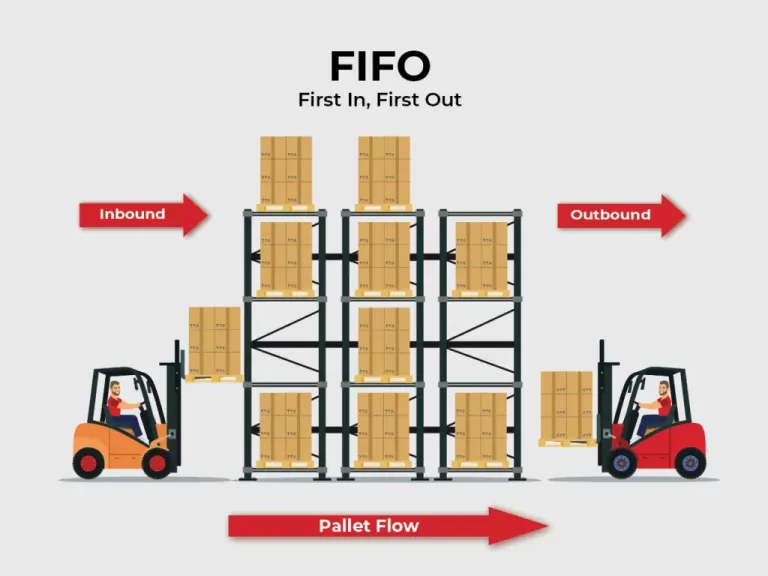
FIFO is an inventory method where the first stock that enters the warehouse is the first to be sold or dispatched. For example, if Batch A arrives before Batch B, Batch A will be sold first — regardless of which batch expires earlier.
When FIFO Works Well
FIFO is simple and widely used. It works best when:
- Products have long shelf lives
- Expiry dates are consistent across batches
- Inventory turnover is extremely fast
Because of its simplicity, FIFO is often adopted by businesses looking for easy stock rotation with minimal system complexity.
Cost Risks of FIFO for FMCG
For FMCG sellers, FIFO has a critical weakness:
it does not prioritize expiration dates.
When different batches have different shelf lives, FIFO can result in:
- Newer stock expiring earlier than older stock
- Increased expired inventory
- Hidden losses that only appear during stock audits
FIFO may look organized on paper, but it can still be costly when expiry risk is high.

What is FEFO?
FEFO prioritizes selling products that are closest to their expiration date first, regardless of when they were received. If a newer batch expires sooner than older stock, FEFO ensures it is dispatched first.
Why FEFO Is Designed for FMCG
FEFO is especially relevant for industries where expiration directly impacts value, including:
- Food and beverages
- Health supplements
- Cosmetics and personal care products
By aligning outbound stock with expiry dates, FEFO actively prevents waste before it happens.
Cost Advantages of FEFO
For FMCG sellers, FEFO helps to:
- Reduce expired and unsellable stock
- Lower write-offs and disposal costs
- Improve inventory accuracy
- Protect profit margins
From a cost perspective, FEFO is not just an inventory method — it is a loss-prevention strategy.
FIFO vs FEFO: The Key Cost Difference
The fundamental difference between FIFO and FEFO lies in what they optimize for.
| Aspect | FIFO | FEFO |
|---|---|---|
| Optimization Focus | Stock age | Expiry date (stock viability) |
| Expiry Priority | Not prioritized | Always prioritized |
| Risk of Expired Stock | Higher when expiry varies | Significantly lower |
| Waste & Write-Offs | More likely | Actively minimized |
| Cost Control Impact | Indirect | Direct and measurable |
In FMCG operations, stock viability matters more than stock age. Selling the oldest stock does not always mean selling the right stock. When expiration dates vary across batches, FIFO can unintentionally allow sellable products to expire, while FEFO ensures that value is extracted before time runs out.
Which Inventory Method Saves More Money for FMCG Sellers?
For most FMCG sellers, FEFO saves more money in the long term.
Expired inventory represents guaranteed loss, and expiry risk is unavoidable in FMCG operations. While FIFO is easier to implement, its simplicity often leads to higher waste. FEFO, on the other hand, directly targets one of the biggest financial leaks in FMCG operations — expired stock.
For decision-makers focused on cost optimization, FEFO is generally the more financially responsible choice.
Why Many FMCG Sellers Struggle to Implement FEFO?
Despite its benefits, FEFO is often harder to execute without the right tools.
Common challenges include manual tracking of expiration dates, limited visibility across batches, and a higher risk of human error. As operations scale, managing FEFO manually becomes inefficient and unreliable.
How a WMS Enables Smarter FIFO and FEFO Decisions
At this point, the challenge is no longer about understanding FIFO or FEFO — it is about execution.
A Warehouse Management System (WMS) that supports multiple inventory strategies allows FMCG sellers to:
- Track inventory by batch and expiry date
- Apply FIFO or FEFO based on product type
- Automatically prioritize outbound stock
- Reduce waste without increasing operational workload
PayRecon WMS is built to support flexible inventory methods, enabling FMCG sellers to implement FIFO, FEFO, or a combination of both based on business needs.
By aligning inventory strategy with system capability, decision-makers can gain better control, reduce losses, and turn inventory into a cost-saving function rather than a risk factor.
Conclusion
FIFO and FEFO are both valid inventory methods, but they serve different purposes.
For FMCG sellers dealing with expiry-sensitive products, FEFO offers a clear financial advantage by minimizing waste and protecting margins. FIFO may be easier, but ease does not always translate into savings.
Ultimately, the most cost-effective inventory strategy is one that aligns product characteristics with system capabilities. With the right WMS in place, FMCG sellers can transform inventory management into a competitive advantage — not a source of hidden costs.