Top 10 Warehouse Management Software in 2025: A Practical Buyer’s Guide
Introduction
Managing a warehouse today requires speed, accuracy, and real-time visibility. With e-commerce and multi-channel orders growing rapidly, choosing the right Warehouse Management Software (WMS) can dramatically improve efficiency and reduce errors.
Therefore, I have compiled the 2025 updated list of the Top 10 WMS, In no particular order.
1. SAP Extended Warehouse Management (SAP EWM)
Firstly, SAP EWM is supports the most complex warehouse operations. Large enterprises use it to manage multi-site warehouse networks with tight process control, deep process customization, and direct integration with automated material handling equipment like conveyors and robots. The system handles complex business rules — cross-docking, wave and zone picking, advanced slotting — and offers strong traceability across lots and batches. Large enterprises use EWM when they need tight control over inventory flows and a single source of truth for multi-country logistics. Typical benefits include fewer stockouts, better space utilization, and smoother integration with ERP finance and procurement modules.
2. Oracle Warehouse Management Cloud
secondly, Oracle WMS Cloud is a cloud-native platform built for scalability and enterprise performance. It delivers real-time inventory visibility, configurable workflows, and mobile scanning tools for floor staff. Besides that, Oracle emphasizes rapid scaling and security, which appeals to companies moving away from legacy on-prem systems. Integration with Oracle ERP and analytics enables unified financial reporting and demand-driven replenishment. Businesses often choose it for predictable cloud costs, strong SLAs, and the ability to add features as they grow.
3. Manhattan Active Warehouse Management
Coming up, We have Manhattan Active WM. it focuses on throughput and optimization driven by AI. It continuously optimizes task assignment, picking routes, and labour schedules to maximize efficiency during peak demand. The platform excels in high-volume distribution centers where milliseconds add up — for example, reducing travel time per pick or balancing workloads automatically. It also supports complex order profiles (cross-dock, multi-line, split shipments) and integrates with warehouse automation tools. Companies running national distribution networks choose Manhattan for predictable performance and advanced optimization.
4. Blue Yonder Warehouse Management
Following, the Blue Yonder combines warehouse execution with strong predictive analytics. It uses demand signals and historical patterns to suggest labour plans, reorder points, and optimal inventory placement. The system is well suited to retailers and distributors who need demand-driven replenishment and seasonal planning. Blue Yonder’s strength is in reducing idle time and improving order accuracy through proactive recommendations. Teams that want to reduce labour costs without sacrificing fulfillment speed often deploy it.
5. Infor CloudSuite WMS
After that, Infor CloudSuite WMS. Infor CloudSuite WMS offers a flexible, easy-to-configure user experience with strong analytics and slotting capabilities. It supports mixed operations — manufacturing warehouses that also ship direct to customers — and offers labor management, cycle counting, and mobile workflows. Infor’s reporting tools help operations managers identify bottlenecks and improve throughput quickly. Companies that need a balance between out-of-the-box functionality and custom workflows favor Infor for its fast implementation and clear ROI on labor and space optimization.
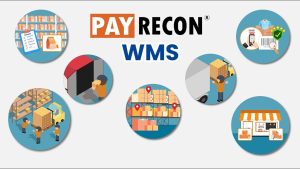
6. PayRecon WMS (Malaysia / Southeast Asia)
PayRecon support eCommerce, multi-channel sales, and mid-market customers in Southeast Asia. It combines WMS features (real-time stock, batch/expiry tracking, mobile scanning) with an OMS that syncs orders from Shopee, Lazada, Shopify, TikTok Shop and more. PayRecon is designed for quick onboarding and practical automation — like auto-routing picks for highest-velocity SKUs and integrating courier rate rules. The platform helps online sellers reduce oversells, automate multi-channel fulfillment rules, and see consolidated reports across sales channels. SMEs and regional brands choose PayRecon for localized integrations and support tailored to Southeast Asian logistics.
7. NetSuite WMS
NetSuite WMS is tightly integrated with NetSuite ERP, giving businesses single-system control over inventory, orders, and finance. This integration simplifies processes like COGS recognition, order-to-cash, and inventory reconciliations. NetSuite’s WMS supports multi-location transfers, picking strategies, and mobile barcode scanning — all within the same ecosystem as purchasing, billing, and CRM. Companies already on NetSuite pick it to avoid double data entry and to gain real-time financial visibility tied to physical inventory movements.
8. Fishbowl Warehouse
Fishbowl is a pragmatic choice for small and mid-sized businesses that need robust inventory control without enterprise overhead. It provides cycle counting, work orders, and straightforward barcode scanning. Fishbowl is known for its QuickBooks integration and simple licensing model, which lowers entry costs. It’s best where business processes are straightforward and the priority is reliable inventory accuracy rather than advanced automation. Retailers and manufacturers with modest SKU counts often see fast payback from reduced stock discrepancies.
9. Extensiv WMS (formerly 3PL Warehouse Manager)
Extensiv is purpose-built for 3PLs and fulfillment centers that serve multiple clients. It handles centralized inventory across client accounts, automated billing, and detailed activity audits for SLA compliance. The platform streamlines onboarding new customers, allocating space and resources per client, and exposing client portals for visibility. 3PL operators use Extensiv to reduce administrative overhead, improve billing accuracy, and deliver real-time inventory and order statuses to their customers.
10. Logiwa IO
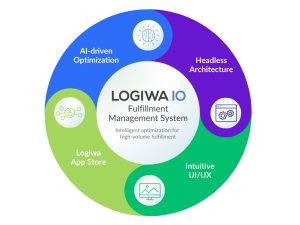
Logiwa is a modern cloud WMS tailored to direct-to-consumer and high-growth eCommerce brands. It emphasizes rapid implementation, automated order routing, and marketplace connectors for fast order inflow. Logiwa’s UI is geared for warehouse teams, with touch workflows and simple exception handling. Brands choosing Logiwa want to reduce time to launch, automate returns processing, and maintain tight SLA controls during sales spikes. It’s a fit where speed and ease of use are as important as feature breadth.
How to Choose the Right WMS (short checklist)
Size & Scale: Enterprise vs mid-market vs SMB.
Channels: Do you sell on marketplaces, webstores, or both?
Integrations: ERP, accounting, couriers and marketplaces.
Automation Needs: Manual processes now vs future automation.
Localization: Regional integrations, local courier support, and local language/SLAs.
Conclusion & Contact Us
In short, each WMS above solves warehouse problems differently. Large enterprises need deep control and custom automation. Growing eCommerce brands need fast onboarding, marketplace connectors, and simple mobile workflows. PayRecon fills the regional mid-market sweet spot by combining WMS and OMS strengths with local integrations and support. Want to try PayRecon? Contact us to get more detail information.