7 Functions of a Warehouse: A Practical Guide for Modern Operations

Understanding the 7 functions of a warehouse is essential for businesses aiming to scale efficiently, reduce operational errors, and improve customer satisfaction. Many warehouse issues—such as inaccurate stock counts, slow fulfilment, or misplaced inventory—often arise because the basic warehouse functions are not implemented systematically.
This article breaks down each 7 Functions of a Warehouse with detailed operational steps and enriched case examples to help readers grasp the subject quickly and clearly.
1. Storage: Organised, Safe, and Accessible Inventory

How It Works
Storage covers three major operational layers:
-
Space Planning: Allocating zones based on temperature needs, fragility, item size, or hazard classification.
-
Slotting Design: Assigning fixed or dynamic storage locations for each SKU.
-
Storage Execution: Labelling racks, organising floor locations, managing pallet stacking rules, and monitoring temperature or humidity.
These elements ensure that inventory remains safe, trackable, and easy to retrieve when needed.
Case Study
A local cosmetics e-commerce warehouse managing 200+ SKUs frequently faced “missing items” during peak seasons.
Solutions implemented:
Created structured SKU zones (lipsticks, skincare, tools).
Assigned fixed rack numbering and labels.
Moved fast-moving SKUs closer to picking zones.
Outcomes:
Misplacement issues reduced by 30%.
Picking time per order decreased by 1.5 minutes.
Order processing capacity improved without hiring additional staff.
Key benefit demonstrated: Storage significantly improved accessibility and reduced workflow interruptions.
2. Inventory Management: Ensuring Accuracy and Stock Transparency

How It Works
Inventory management typically includes:
Inbound Recording: Capturing quantities, batch numbers, expiry dates.
Movement Tracking: Recording every stock movement—relocation, picking, returns.
Cycle Counting: Conducting regular partial counts using ABC classification.
Reorder Point Monitoring: System-generated low-stock alerts to avoid stockouts.
Case Study
A Philippines online fresh-grocery retailer previously relied on Excel and often sold items that were actually out of stock.
Actions taken:
Implemented WMS for real-time stock updates.
Introduced daily ABC cycle counting.
Added expiry and batch tracking.
Results:
Inventory accuracy increased from 84% to 97%.
Customer complaints dropped by 20%.
Expiry-related waste reduced by 12%.
Key benefit demonstrated: Real-time visibility and precise tracking improved customer trust and operational reliability.
3. Receiving: The First and Most Critical Quality Checkpoint

How It Works
Receiving involves four detailed steps:
Unloading Inspection: Checking carton condition and verifying shipment integrity.
Documentation Verification: Matching PO (Purchase Order) and delivery order details.
Quality Checking: Inspecting defects, leakage, expiry issues, or mismatches.
GRN Creation: Registering all accepted items into the system as official stock.
Case Study
A beverage distributor often discovered damaged bottles only after items moved to picking.
Improvements:
Introduced a two-step receiving process (quantity, then quality).
Used tablets to record defects and upload photos.
Automated supplier notifications for batch inconsistencies.
Outcome:
Return cases reduced by 15%.
Fewer picking interruptions caused by incorrect batches.
Supplier claim processes became smoother.
Key benefit demonstrated: Receiving blocked upstream errors, improving downstream efficiency.
4. Put-Away: Placing Goods in the Right Location Efficiently

How It Works
Put-away consists of:
Slotting Decisions: Assigning ideal storage areas based on sales velocity, dimensions, and product category.
Transport & Placement: Moving items via forklift or manual handling according to system instructions.
Location Confirmation: Scanning racks or bins to update inventory locations accurately.
Case Study
A fashion retail warehouse frequently piled new arrivals randomly, leading to delays in locating stock.
Improvements made:
Prioritised fast-moving items near the picking zone.
Stored slow-moving items in top racks.
Used handheld scanners to confirm every put-away task.
Results:
Picking speed improved by 22%.
Warehouse space utilisation improved by 17%.
Stocktaking time reduced by 40%.
Key benefit demonstrated: Put-away optimisation reduced internal travel time and maximised warehouse flow efficiency.
5. Picking: The Most Labour-Intensive and Costly Operation

How It Works
Picking includes the following operational actions:
Route Planning: Generating an optimised picking path.
Selecting Picking Methods: Single, batch, wave, or zone picking depending on order volume.
Verification Scanning: Ensuring correct SKU and quantity.
Handover to Packing: Grouping completed items by order for packing.
Case Study
A hardware e-commerce warehouse struggled with slow picking due to large SKU size variation and unstructured routes.
Optimisation steps:
Implemented zone picking to reduce unnecessary walking.
Heavy items stored on lower racks; light items on upper racks.
System-generated shortest routes.
Outcomes:
Pick time reduced from 14 minutes to 6 minutes per order.
New staff training became faster because the system guided their workflow.
Picking errors nearly eliminated due to scanning.
Key benefit demonstrated: Picking improvements drastically reduced labour time and increased fulfilment capacity.
6. Packing: Protecting Goods and Ensuring Order Accuracy
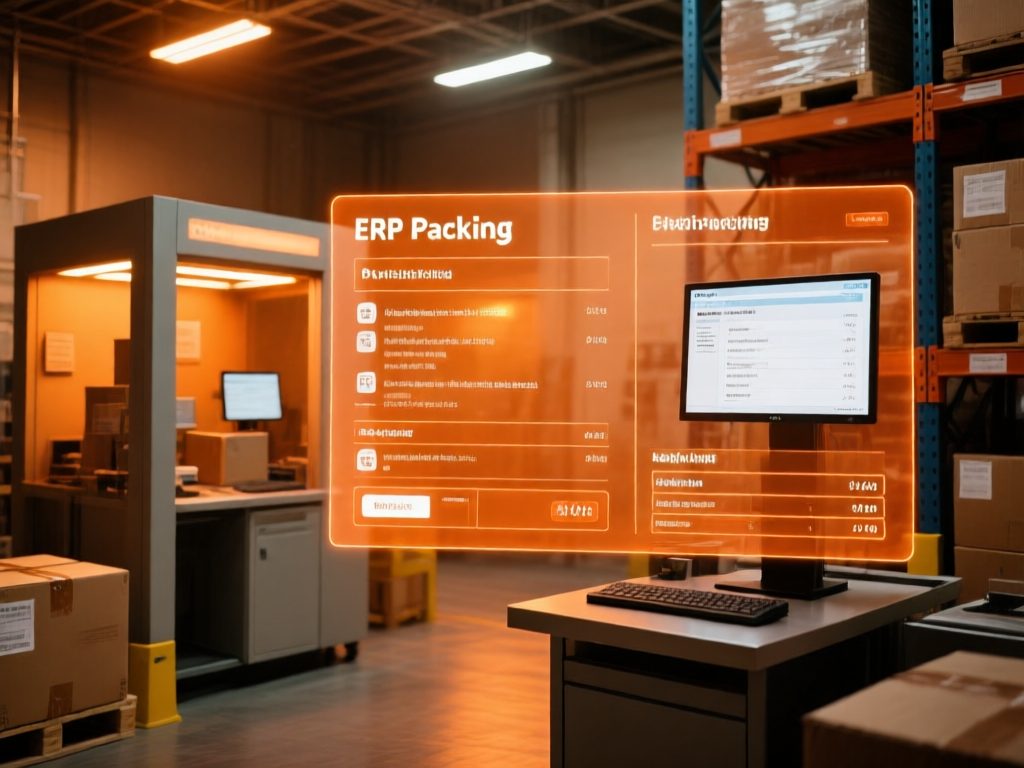
How It Works
Packing involves:
Order Verification: Matching items to order details.
Protective Packaging: Using bubble wrap, reinforced boxes, or foam inserts.
Labelling and Documentation: Attaching airway bills, invoices, or batch stickers.
Sorting by Courier: Grouping parcel batches by delivery provider or zone.
Case Study
A home appliance e-commerce seller experienced high damage rates during delivery due to inconsistent packaging.
Actions taken:
- Introduced standard box sizes (S–XL).
- Added protective foam inserts for fragile appliances.
- Automated airway bill printing to reduce labelling mistakes.
Results:
- Damage rate dropped by 40%.
- Customer refund expenses reduced significantly.
- Packaging time shortened by 1 minute per parcel.
Key benefit demonstrated: Packing ensured delivery safety and reduced post-sales costs.
7. Shipping: Smooth Handover to Logistics and Faster Delivery

How It Works
Shipping includes:
Pickup Scheduling: Arranging fixed courier pickup times.
Courier Sorting: Organising parcels by courier or region.
Handover Scanning: Confirming each parcel exits the warehouse.
Status Updating: Updating tracking status to “shipped” for customers.
Case Study
A cross-border e-commerce seller previously delivered parcels manually to courier branches, causing inconsistent dispatch times.
Fix implemented:
- Established fixed daily courier pickup schedules (morning, afternoon, evening).
- Pre-sorted parcels based on shipping method.
- Scanned each parcel during handover.
Results:
- Same-day dispatch rate hit 98%.
- Customer inquiries about shipping delays reduced sharply.
- Logistics cost reduced as manual drops were eliminated.
Key benefit demonstrated: Shipping improvements significantly enhanced delivery reliability.

The 7 functions of a warehouse are not merely operational concepts—they are interconnected processes that directly impact fulfilment speed, accuracy, and overall business growth. By strengthening each function through structured workflows and proper system support, businesses can elevate warehouse performance without major cost increases.
If you’re aiming to improve warehouse efficiency, streamline your operational workflow, or implement digital tools like WMS or OMS, I can assist in analysing your current processes and recommending clear, actionable improvements. Let’s build a warehouse operation that supports your long-term growth.