A Simple Guide to ERP in Warehouse for Fast Understanding

When businesses grow, warehouse operations naturally become more complex—more SKUs, multiple sales channels, higher fulfilment expectations, and tighter profit margins. This is why many companies are turning to ERP in warehouse management as a strategic backbone. ERP is no longer just “software”; it is an end-to-end operational control tower that synchronises inventory, purchasing, sales, and financial data into one unified system. In my experience working with digital operations across Malaysian SMEs, companies that implement ERP early typically gain clearer visibility, reduce internal bottlenecks, and build stronger workflows that scale sustainably.
Key Features of ERP for Warehousing
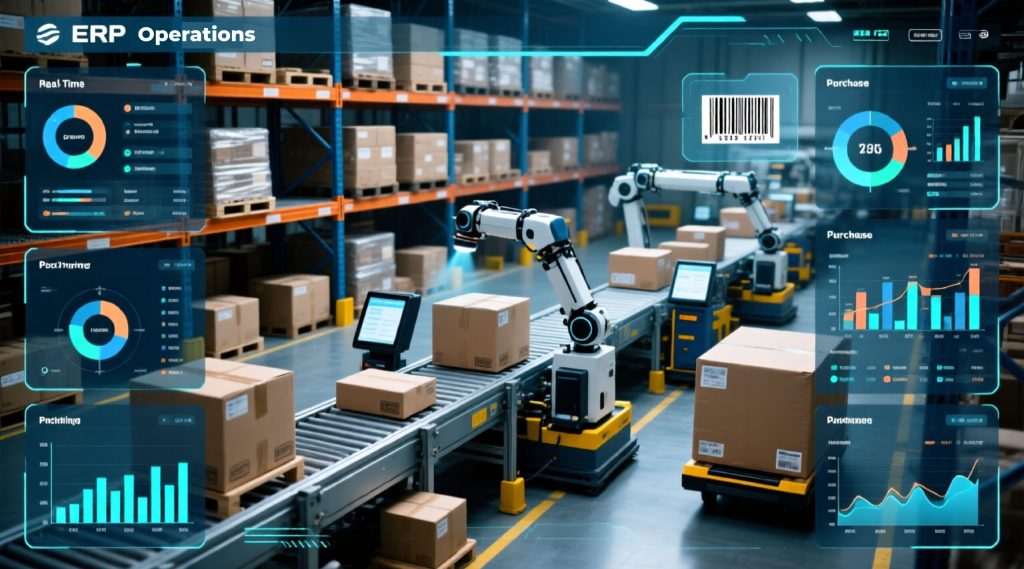
1. Real-Time Inventory Tracking and Movement Control
ERP doesn’t just show how much stock you have—it logs every movement from the moment goods arrive until the moment they leave. It tracks:
- GRN (Goods Received Notes)
- Put-away locations
- Bin-to-bin transfers
- Picking and packing status
- Shipment confirmation
This gives managers the ability to trace discrepancies back to the exact user, time, and action.
Why this matters: In high-volume environments, even one inaccurate entry can disrupt stock counts, cause order delays, or trigger overselling. ERP’s timestamped audit trail eliminates this risk.
2. Automated Procurement Logic & Demand Prediction
ERP analyses past sales data, supplier lead times, safety stock levels, and seasonal patterns to automatically suggest purchase orders. The system alerts buyers when stock crosses a predefined threshold and prevents duplicate purchases across departments.
Operational impact: Buyers no longer rely on “feeling” or manual checks; decisions are driven by data. For businesses with fast-moving consumables, this directly reduces stockouts and prevents overstock waste.
3. Centralised Multi-Department Data Synchronisation
ERP integrates warehouse, sales, finance, procurement, and customer service. For example:
- Sales cannot commit stock because ERP reflects the live availability.
- Finance sees real-time cost updates from stock movements.
- Warehouse picks based on the latest order revisions.
This eliminates conflicts caused by multiple Excel files or outdated versions.
Example: A distributor reported cutting internal disputes by half because all departments finally referenced the same data source.
4. Intelligent Order Fulfilment & Task Prioritisation
ERP assigns picking routes, prioritises urgent orders, supports batch picking, and validates items via barcode scanning. It can also separate bulk orders, fragile items, or temperature-sensitive goods.
Operational impact: Workers move faster with fewer mistakes, especially when dealing with mixed online and offline orders.
5. Multi-Location, Multi-Channel Warehouse Coordination
For brands selling across Shopee, Lazada, TikTok Shop, retail stores, and their own website, ERP consolidates all order flows and synchronises inventory deductions. It also manages multiple warehouses, separate storage zones, or franchise stock.
Business benefit: No more platform overselling, no more guessing which warehouse has stock, and no more manual reconciliations at month-end.
Benefits of Using ERP in Warehouse Operations

1. Higher Accuracy in Receiving & Put-Away Operations
ERP guides staff with predefined receiving steps, supported by barcode/QR validation. This reduces misplacement, wrong quantity entries, and incorrect SKUs being shelved.
Targeted benefit: Prevents data contamination at the earliest stage of warehouse flow.
2. Faster and More Accurate Order Picking
With automated picking lists and smart routing, workers know exactly where to go and what to pick.
Targeted benefit: Minimises mispicks during peak seasons and accelerates fulfilment speed.
3. Stronger Inventory Cost Control & Stock Transparency
ERP automatically updates cost of goods sold (COGS), tracks stock ageing, and highlights slow-moving SKUs. Managers can act early on clearance strategies.
Targeted benefit: Reduces dead stocks that quietly drain warehouse space and cash flow.
4. Improved Workforce Efficiency & Labour Planning
By capturing operational timestamps (e.g., picking duration per employee), ERP allows managers to identify inefficiencies and optimise manpower allocation.
Targeted benefit: Prevents overstaffing or understaffing in key processes.
5. Better Management Decisions Through Real-Time Dashboards
Managers can track live stock levels, order fulfilment performance, warehouse capacity usage, and incoming purchase orders.
Targeted benefit: Decisions shift from reactive to proactive, especially during promotional campaigns.
Common Challenges When Implementing ERP
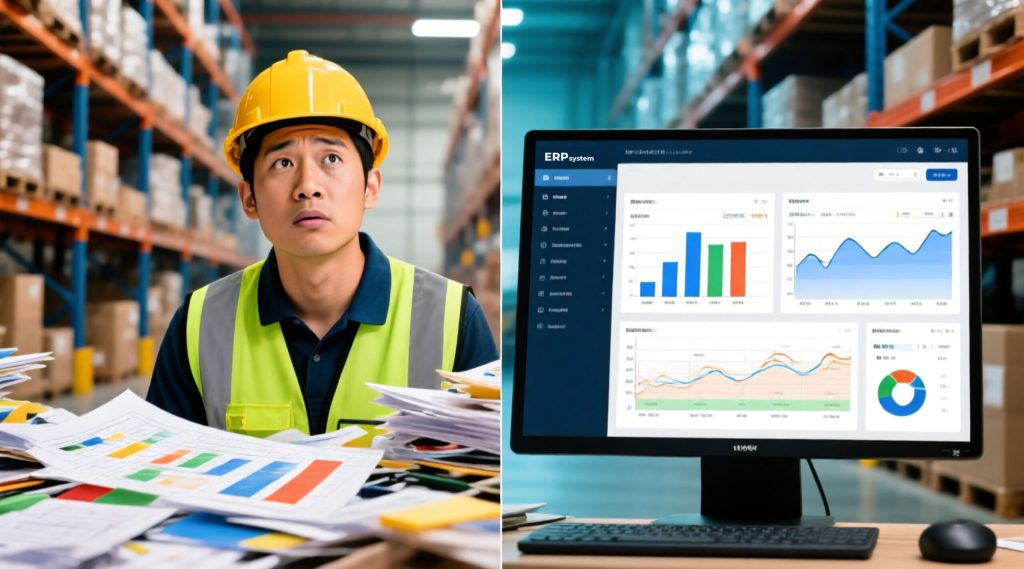
1. Staff Resistance and Behavioural Inertia
Most resistance stems from fear—fear of losing control, fear of being judged based on system data, and fear of unfamiliar tools. Warehouse teams accustomed to “own methods” may worry ERP will expose mistakes or slow them down.
Underlying reason: Change threatens comfort zones. Without early involvement and role-based training, adoption becomes difficult.
2. Data Cleanliness Problems During Migration
Legacy data usually comes from Excel, WhatsApp orders, standalone POS, or marketplace CSV files. These often contain duplicated SKUs, inconsistent naming conventions, missing supplier details, or inaccurate stock counts.
Underlying reason: Years of manual processes accumulate errors. ERP demands structured data—dirty data delays implementation and triggers system rejection issues.
3. Workflow Misalignment Between System and Real Operations
Sometimes businesses expect ERP to “fit” their current workflow, even when the workflow itself is flawed. Or the internal processes are undocumented, tribal, and depend on individuals.
Underlying reason: ERP is process-driven; unclear internal SOPs lead to configurations that do not match reality.
4. Lack of Cross-Department Communication
Sales might push for urgent fulfilment, procurement focuses on cost, while warehouse prioritises accuracy. ERP exposes these conflicts.
Underlying reason: Misaligned KPIs. ERP centralises data, so issues become visible—leading to friction during the first few months.
Simple Framework for Choosing the Right ERP
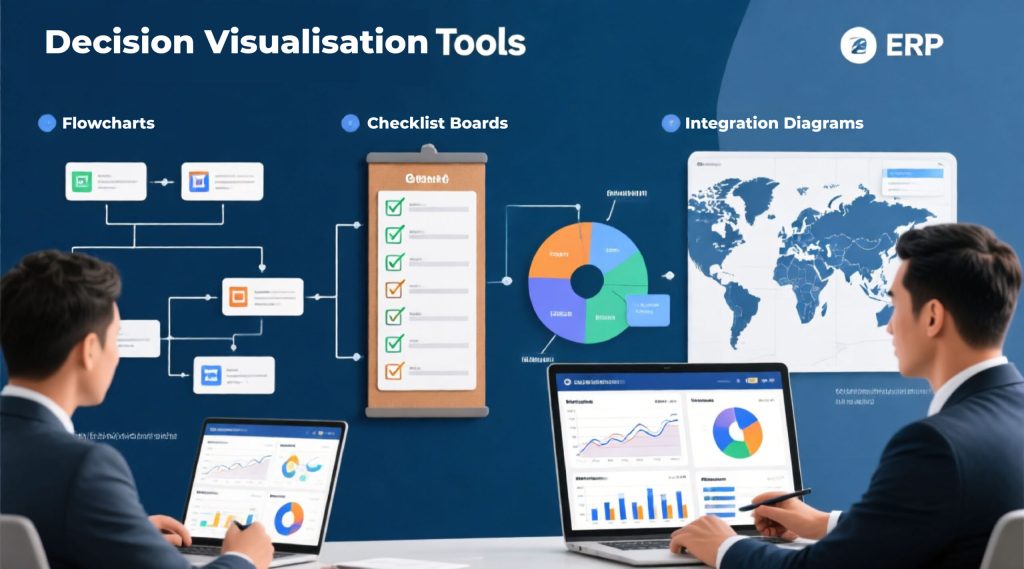
Step 1 – Map Out Current and Future Warehouse Workflows
List out every step: receiving, put-away, transfers, picking, packing, dispatching, returns, and cycle counts. Include peak season behaviours and multi-channel scenarios. This helps you identify which ERP features are essential now and which features will be critical in 2–3 years.
Step 2 – Identify Integration Requirements Across All Departments
Evaluate whether the ERP needs to connect with your marketplaces, POS system, finance software, CRM, or delivery partners. The more seamless the integrations, the less manual work and the fewer errors your team will face.
Step 3 – Evaluate Scalability and Long-Term Flexibility
Select an ERP that can handle increased SKU volume, additional warehouses, regional expansion, or new sales channels. Avoid systems that only solve today’s issues but cannot support future growth, which would require a costly switch later.
Step 4 – Assess Implementation Support, Training, and After-Sales Reliability
Many ERP failures come from poor onboarding. Ensure the provider offers structured training, onsite or remote support, workflow consultation, and fast response times. A strong support team is often more valuable than a long list of system features.
Conclusion
In today’s competitive landscape, implementing ERP in warehouse operations is not just about digitisation—it is about building a scalable, predictable, and efficient operational engine. With real-time tracking, integrated processes, automated procurement, and improved accuracy, ERP enables companies to reduce wastage, fulfil orders faster, and maintain healthier inventory control.
Despite the challenges of change management and data migration, businesses that implement ERP effectively gain long-term advantages in speed, decision-making, and operational stability. For companies aiming to strengthen warehouse performance and achieve sustainable growth, ERP is one of the most strategic investments you can make.

Ready to optimise warehouse operations with ERP?
Explore how the right ERP can streamline your inventory, reduce errors, and accelerate fulfilment.
If you need help evaluating options or designing a full warehouse digitalisation plan, reach out—we can walk through your workflows and propose a tailored solution for your business.