Top Warehouse Management Software in 2025: How Does PayRecon WMS Compare?

In the rapidly evolving logistics and supply chain landscape, businesses are searching for the best warehouse management software in 2025 to stay competitive. This comprehensive article compares leading WMS solutions and provides a clear evaluation of how PayRecon WMS compares based on features, scalability, integration, and value for different business use cases. If you’re researching “2025 best WMS system” or “warehouse management software comparison,” this guide is designed to help you make a smart decision with market context and practical insights.
Table of Contents

Introduction: Why WMS Matters in 2025
Warehouse Management Software (WMS) has become indispensable as warehouses adopt digital transformation to meet ecommerce growth, omnichannel fulfillment demands, and tighter delivery expectations. By improving operational accuracy, reducing manual work, and providing real-time visibility from receiving to shipping, a modern WMS becomes critical to success. According to industry analysts, top vendors such as Oracle, SAP EWM, and Manhattan Associates are being evaluated for 2025 deployments. (gartner.com)
Choosing the best WMS in 2025 depends on more than features alone — factors like enterprise scale, automation needs, integration requirements, cost, and support footprint all play a role. This article benchmarks major WMS options against PayRecon WMS, a cloud-native solution optimized for Southeast Asian businesses and ecommerce operations.
What to Look for in the Best Warehouse Management Software in 2025
Before diving into comparisons, it helps to define the core capabilities that separate top-performing WMS platforms:
✅ Real-Time Inventory Visibility
Having visibility into stock levels and movements is essential for avoiding overstocking, stockouts, and delivery delays. (gartner.com)
✅ Automation & Workflow Optimization
Advanced systems support directed picking, wave batching, and automated replenishment, freeing labor from repetitive tasks and minimizing errors.
✅ Integration with E-commerce & ERP
Seamless connectivity with marketplaces, order systems, accounting software, and ERP platforms ensures unified workflows. (explorewms.com)
✅ Scalability & Cloud Execution
Cloud-native architectures allow on-demand scalability and automatic updates, critical for growing businesses.
✅ Ease of Use & Support
Intuitive interfaces, comprehensive documentation, and responsive support are particularly important for mid-market and SME users.
These criteria establish the baseline for evaluating different WMS platforms effectively.
Top Warehouse Management Software in 2025: Market Overview
| WMS Platform | Best Fit | Key Strengths | Typical Limitations |
|---|---|---|---|
|
SAP Extended Warehouse Management (EWM) |
Enterprise |
Deep integration with SAP SCM & ERP; advanced automation |
Complex implementation and higher cost |
|
Oracle Fusion Cloud WMS |
Mid/Large enterprise |
Cloud-native, scalable, real-time features |
Requires Oracle ecosystem expertise |
|
Manhattan Associates WMS |
Large scale operations |
Advanced optimization & AI for picking/slotting |
Premium pricing |
|
Infor / HighJump WMS |
Distribution & manufacturing |
Industry specific modules |
Moderate learning curve |
|
PayRecon WMS |
Ecommerce, SMEs |
Fast deployment, seamless marketplace sync & API integrations |
Less suited for ultra-high automation robotics |
Feature Comparison: PayRecon WMS vs. Other Leading Systems
| Feature | PayRecon WMS | Traditional Enterprise WMS | Notes |
|---|---|---|---|
|
Deployment Speed |
Fast onboarding |
Longer setup cycles |
Cloud-native accelerates implementation |
|
Marketplace Integration |
Built-in with marketplaces |
Varies, often custom |
Easy sync with Shopee, Lazada, TikTok, etc. |
|
Real-Time Inventory |
Yes |
Yes |
Standard |
|
Automation & Optimization |
AI workflows, smart picking |
Advanced robotic support |
Enterprise WMS often has deeper automation |
|
Multi-Warehouse Management |
Yes, centralized |
Yes |
Comparable |
|
Local Support |
Regional support teams |
Global support tiers |
Local expertise can speed issue resolution |
|
Total Cost of Ownership |
SME friendly |
Higher TCO |
PayRecon targets mid-size businesses |
Why PayRecon WMS Stands Out in 2025
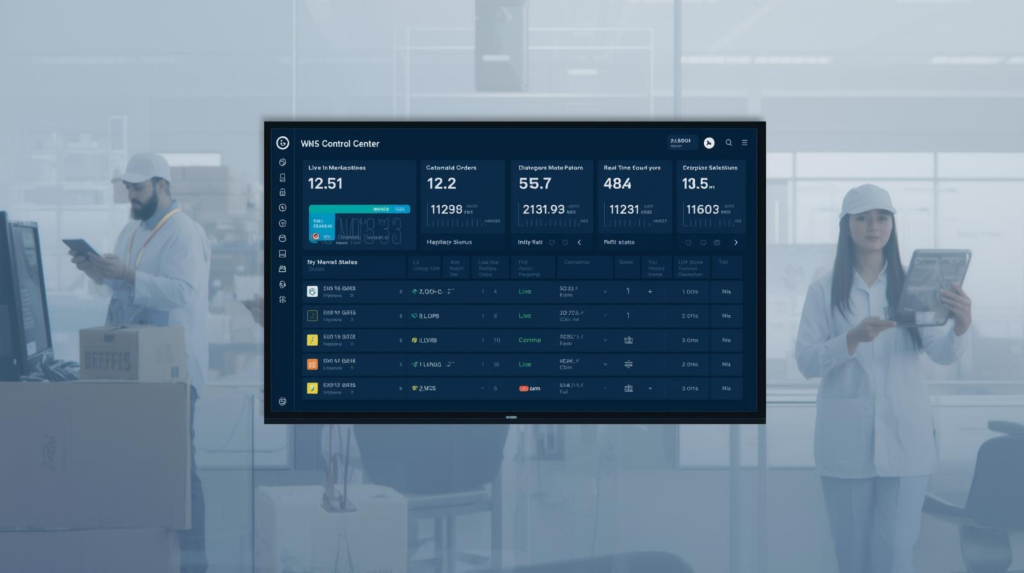
By simplifying inbound, inventory management, picking, and outbound processes, PayRecon WMS helps ecommerce sellers and 3PL operators improve accuracy and efficiency. It also supports barcode/RFID scanning, KPI tracking, and automated workflows.
One of PayRecon’s differentiators is the built-in synchronization with marketplaces and order sources, reducing manual reconciliation and errors compared to generic WMS systems.
Unlike heavy enterprise suites, PayRecon delivers flexibility — allowing businesses to scale without upfront infrastructure costs while benefitting from modern automation and real-time control.
Focusing on Southeast Asian markets, PayRecon tailors support and implementation to regional business practices — a strength often overlooked by large global vendors.
When Other WMS Systems Might Be a Better Fit
Although PayRecon WMS is ideal for ecommerce businesses, SMEs, and 3PL operators, certain scenarios may require alternative solutions:
🔸 Ultra-Large Global Operations: Enterprises with complex, highly automated warehouses or robotics infrastructure may benefit more from SAP EWM or Manhattan Associates.
🔸 Heavy Robotics & Fulfillment Automation: Organizations relying on deep warehouse automation may need more advanced robotic features.
🔸 Full ERP Ecosystem Integration: Companies already committed to SAP or Oracle ERP platforms may prioritize fully integrated solutions.
This balanced perspective strengthens credibility and informs buyers before they commit.
Conclusion
As you evaluate the best warehouse management software in 2025, consider both technical capabilities and business fit. While enterprise systems like SAP EWM and Oracle WMS remain strong for large corporations, PayRecon WMS compares favorably for ecommerce-focused and mid-market companies seeking rapid deployment, strong marketplace integrations, and real-time visibility without enterprise complexity.
For businesses that need a WMS that matches operational realities — not just feature checklists — PayRecon offers an adaptable and cost-efficient alternative tailored to digital commerce and regional nuances.