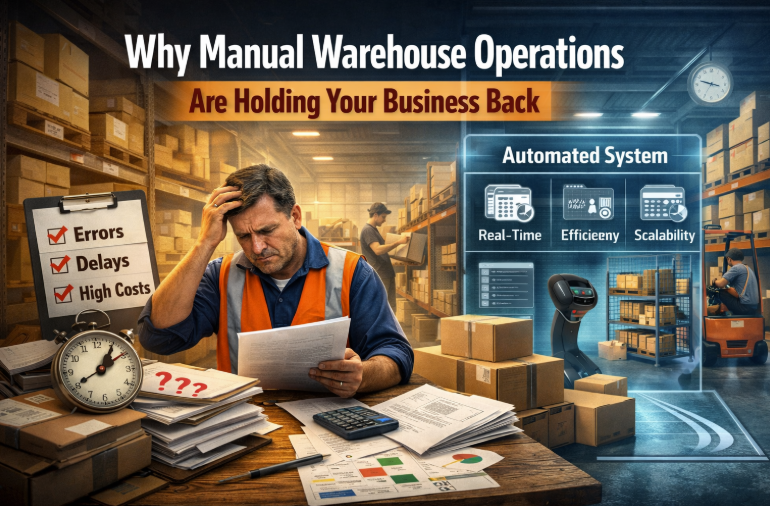
Why Manual Warehouse Operations Are Holding Your Business Back
Introduction of Manual Warehouse Operations
Manual warehouse operations are slowing down business growth. Relying on warehouse manual processes introduces errors, delays, and inefficiencies that directly impact operational performance and revenue. As order volumes increase, these manual warehouse management methods struggle to keep up, leading to dissatisfied customers, higher costs, and lost opportunities.
Common Problems of Manual Warehouse Operations
Here are the key issues that businesses face with warehouse operations:
Inventory Inaccuracy: Frequent stock discrepancies, miscounts, and misplaced items disrupt order fulfillment.
Slow Order Processing: Manual picking, packing, and documentation lengthen fulfillment cycles.
High Labor Costs: Rework, overtime, and inefficiency increase staffing expenses.
Limited Scalability: Processes that work at small scale fail when business grows.
Poor Visibility: Lack of real-time data prevents proactive decision-making.
Why These Problems Happen (Root Causes)
The root causes behind these problems usually include:
Human Error: Manual entries, misplaced items, and miscommunication create mistakes.
Fragmented Processes: Disconnected systems or spreadsheets prevent smooth workflow.
Lack of Standardization: Inconsistent procedures lead to inefficiency and errors.
Absence of Automation: No system support to guide picking, packing, or tracking.
Signs Your Business Has This Problem
If you notice the following, manual warehouse operations might be holding you back:
Frequent stockouts or overstock situations
Delayed or incorrect shipments
Excessive overtime or labor complaints
Difficulty scaling operations or onboarding new staff
Managers lack real-time insight into inventory and order status
Solutions to Fix Manual Warehouse Operations
Before investing in software, businesses can adopt these principles:
Standardize Processes: Create uniform workflows and checklists.
Introduce Tracking Methods: Use barcodes or QR codes to reduce errors.
Monitor KPIs: Measure accuracy, order speed, and fulfillment performance.
Train Staff Regularly: Ensure employees follow best practices consistently.
Prepare for Automation: Evaluate areas where digital tools could replace manual steps.
How PayRecon Helps Solve This
PayRecon WMS addresses manual warehouse management challenges with practical solutions:
Automated Inventory Tracking: Real-time visibility of stock levels reduces errors and stock discrepancies.
Guided Picking & Packing: Step-by-step workflows increase efficiency and accuracy.
Scalable Operations: Easily handle growth, multiple locations, and peak periods without adding labor.
Performance Analytics: Track KPIs, identify bottlenecks, and make informed decisions.
Integration Ready: Seamlessly connects with ERP and accounting systems for smooth operations.
Conclusion
In conclusion, manual warehouse operations create inefficiencies, errors, and scalability limits that directly hurt your bottom line. Addressing these issues is critical to improving fulfillment, lowering costs, and growing your business efficiently.
👉 Take the next step—contact PayRecon today to see how our WMS can streamline your warehouse operations and boost your business performance.